
Most "should I hire fractional RevOps" content is written by fractional RevOps consultancies. The answer is always yes, the reasoning is always seamless, and the call-to-action is always "book a call to find out."
This is the version that's also written by a fractional RevOps practitioner — but with the honest caveat that fractional is the right answer for some companies and the wrong answer for others. Knowing which side of the line you're on saves you anywhere from £8K a month to £250K a year.
The three stages of RevOps maturity
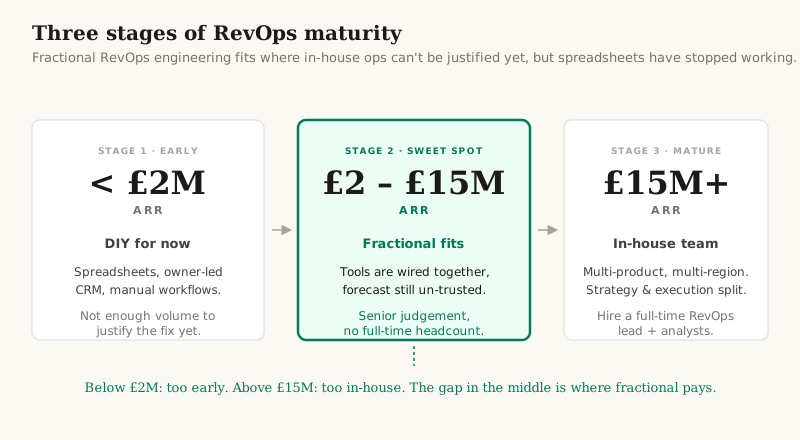
Stage 1 — Pre-RevOps (under £2M ARR)
What this looks like: the founder and VP Sales handle the CRM directly. No dedicated person. Workflows are simple, the team is small, the data isn't yet complicated enough to drown anyone.
The right answer at this stage: don't hire RevOps yet. The cost-benefit doesn't work — you'd be paying for sophistication you can't yet use. What you can do is a one-off audit and cleanup project once or twice a year (£3-8K depending on scope) to stop the data debt accumulating beyond what's manageable.
The risk of hiring too early: you create a role that's underutilised. The person spends their first six months building infrastructure for problems you don't yet have, and you start questioning whether the spend is justified. By the time you do have the problems, you've already let the role go.
Stage 2 — The awkward middle (£2-15M ARR)
What this looks like: 5-15 reps. Multiple workflows. Growing data debt. Forecast disputes appearing in your weekly cadence. New integrations adding complexity faster than you can document them. The CRM is now actively producing numbers you don't quite trust.
This is the fractional RevOps sweet spot. The full-time hire isn't justified yet — at £100-160K base plus benefits and onboarding, you're looking at £180-250K all-in for the first year. But the systems debt is compounding faster than founders or VPs can fix in their nights and weekends.
Fractional fills the gap. You get senior-level execution at 10-20 hours per week for £8-18K per month. The work is structured, scoped, and ends with documentation — not a permanent dependency.
Stage 3 — Justified RevOps headcount (£15M+ ARR)
What this looks like: 15+ reps, multiple revenue lines, complex pipeline, requirements that span beyond CRM into data warehouse, attribution, comp design.
At this point, a full-time RevOps Director makes sense. The work is constant, benefits from someone embedded in standups and sprint planning, and increasingly requires institutional knowledge that fractional engagements can't accumulate at the same depth.
Fractional often becomes the bridge to the full-time hire — interim coverage while you recruit, plus transition support once the full-time person joins.
When fractional RevOps is the right answer
Five conditions. Most need to be true.
- You're at £2-15M ARR with growing pipeline. You have problems worth solving. Below that, you don't yet — the cost-benefit isn't there.
- CRM data quality is visibly degrading. Forecast disputes, missed leads, conversion rates that don't reconcile, lifecycle stage chaos. Symptoms you can name, not vague unease.
- You don't have headcount budget for a £180-250K hire. Either the budget doesn't exist or it's earmarked elsewhere. Fractional gives you senior expertise without that commitment.
- You need senior-level execution, not a junior who's still learning. The problems in Stage 2 portals are unforgiving. A junior RevOps hire spends their first year learning to diagnose what a senior practitioner can name in their first week.
- The work is scoped: "build the systems" vs. "be a permanent ops team". Fractional is project-based or retained-with-defined-deliverables, not an endless ticket queue. If you need someone in standups every day, you need a full-time hire.
When fractional is not the right answer
Five red flags. If any apply, fractional probably isn't the right move.
- You're under £1M ARR. You don't have problems worth £8-15K per month yet.
- You need full-time presence in standups and sprint planning. Fractional is async-first.
- The work is volume-based, not project-based. Fractional engagements aren't structured for high-volume small-task throughput.
- You want someone to own a function long-term. Fractional is bridge work, not permanent ownership.
- Your team won't actually implement what fractional delivers. Fix that first, or go done-for-you (more expensive, but the work actually ships).
Before you commit to fractional, full-time, or DIY, run the free CRM audit. 90 seconds, read-only HubSpot OAuth. You'll get a quantified score, your top three fires, an estimated annual revenue leak range, and a 30-day fix sequence. Whichever path you choose, you'll know what you're buying.
What fractional RevOps actually costs
UK market rates, as of 2026:
- £8-12K per month for senior practitioners (5-8 years experience), 10-15 hours per week
- £12-18K per month for Director-level (8+ years), 15-20 hours per week
- £18-25K per month for specialised work — specific CRM platforms, complex attribution setups, multi-CRM migrations
Project-based "build the system" work that's fully done-for-you typically runs £25-45K fixed-scope for a 6-12 week engagement.
Watch out for engagements priced under £5K per month. These are usually either junior practitioners still learning the trade, or "consultant sends an email and waits for the next one" arrangements that don't deliver embedded execution. The work that actually moves your forecast is built and tested in your accounts, not described in a slide deck.
The math vs. a full-time hire
A mid-level full-time RevOps hire in the UK runs roughly:
- Base salary: £100-160K
- Benefits, taxes, equipment, software: £20-40K
- Onboarding (productivity ramp): 3-6 months at reduced output
- Hiring time: 3-6 months from job spec to offer accepted
All-in first-year cost: £180-250K. £15K per month fractional × 12 = £180K. Roughly the same first-year cost — but with senior-level expertise from week one, no recruiting time, and a clean exit if the engagement isn't working.
The trade-off: fractional doesn't accumulate institutional knowledge the way an FTE does. After 18-24 months in seat, an embedded FTE knows your business better than any external practitioner can. That's why fractional works best as bridge work, not as a permanent substitute for the role.
The pre-hire diagnostic
Before you hire anyone — fractional or full-time — run a diagnostic. You want to know what you're actually buying.
Three questions to answer:
- What's broken? Specific issues, not vibes. "Our forecast accuracy was 64% last quarter" beats "the forecast feels off."
- What's the cost of doing nothing? How much pipeline is at risk, how much revenue is leaking, how many rep-hours are being spent on manual workarounds each week.
- What would a 90-day fix look like? A concrete sequence of work, not a vague "improve RevOps maturity" goal.
If you can't answer all three, the first hire isn't a RevOps engineer — it's the audit that surfaces the answers. The five-category HubSpot CRM audit methodology is structured to give you a quantified answer to each of those three questions before you commit to any hire.
A decision framework
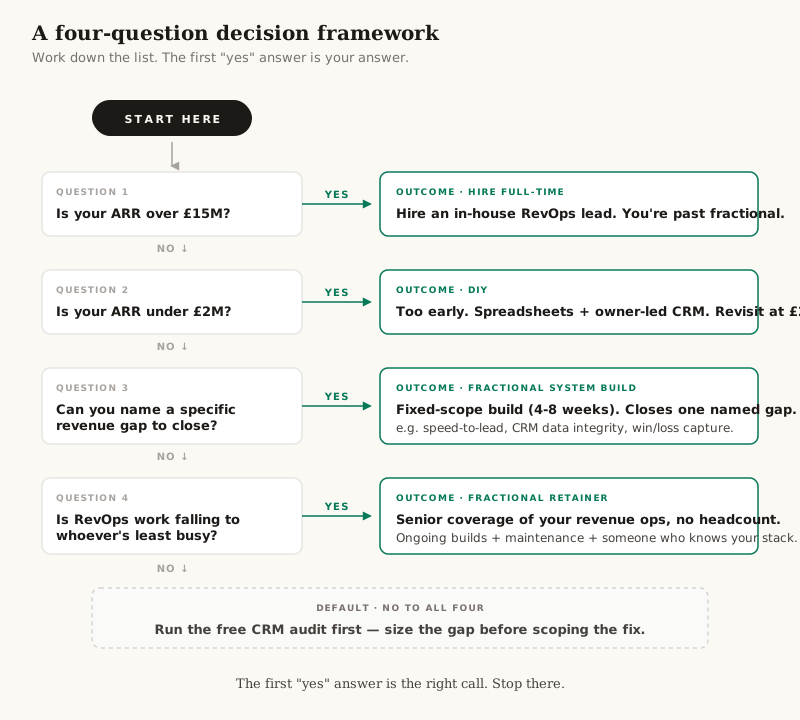
Four questions, in order. The pattern of your answers tells you which path:
- Are you between £2M and £15M ARR? If no → wait, or commission a one-off cleanup.
- Is your CRM visibly causing problems? If no → wait. If yes, continue.
- Do you have headcount budget for £180-250K all-in? If yes → consider full-time. If no → fractional.
- Does your team have capacity to implement what's recommended? If yes → retained fractional. If no → done-for-you fractional.
Once you've landed on fractional, the remaining choice is structural: one-off project (fixed scope, 4-12 weeks, you own the system afterwards) or ongoing retainer (monthly, ongoing ownership of the systems as the business changes). Most £2-15M ARR portals end up at the same answer — a retained engagement with a defined three-month scope, transitioning to monthly retainer once the initial work is done. That's not a coincidence. It matches where the work actually is at that stage.
The honest bottom line
Fractional RevOps isn't always the right answer. Below £2M ARR you don't have the problems yet. Above £15M ARR you usually want a full-time hire. In between, it's the cheapest way to get senior expertise without the full-time commitment — provided you brief the engagement against real problems, not vague unease.
Run the diagnostic first. Then decide.
If you've worked through the framework above and fractional looks like the right fit for your stage, tell me what's not working — a few sentences is enough. I'll reply within one working day with a straight answer, not a link to book a call.
If you want to ground the decision in real data first, the broader methodology behind the diagnostic lives in the companion piece, How to Audit Your HubSpot CRM. And if lifecycle data quality is part of what's degrading your forecast, HubSpot Lifecycle Stages: The Quirks Everyone Hits covers the most common cause.

Frequently asked questions
What is fractional RevOps?
Fractional RevOps is a senior-level revenue operations practitioner working with your company on a part-time basis — typically 10 to 20 hours per week — instead of as a full-time hire. It's used by B2B SaaS companies that have RevOps problems worth solving but can't justify a £180-250K full-time hire. Engagements usually run 3 to 12 months and are either project-based or retained.
When should a B2B SaaS hire fractional RevOps?
Three conditions need to be true: you're between £2M and £15M ARR with growing pipeline, your CRM data quality is visibly degrading, and you don't yet have headcount budget for a full-time hire. Below £2M ARR you don't have problems worth £8-15K per month. Above £15M ARR a full-time RevOps Director usually makes more sense.
How much does fractional RevOps cost?
The market range in the UK is £8-18K per month for senior practitioners at 10-20 hours per week, on 3 to 12 month engagements. Done-for-you build projects can run £25-45K fixed-scope. Cheaper rates under £5K per month usually signal junior practitioners or arrangements where a consultant sends an email once a month rather than delivering embedded execution.
Fractional RevOps vs full-time hire — which is better?
It depends on stage. Below £15M ARR, fractional is usually right. Above £15M ARR, full-time becomes more efficient because the work is constant and benefits from someone embedded in standups and sprint planning. Many SaaS companies use fractional as the bridge to a full-time hire.
What does fractional RevOps actually do?
Real fractional RevOps is embedded execution, not advice. The work includes building workflows, fixing pipeline integrity, deconflicting automations, auditing forecast quality, designing and documenting handoffs, and writing runbooks for handover. Surface-level monthly-call arrangements aren't fractional RevOps — they're retainers someone forgot to cancel.
How long does a fractional RevOps engagement last?
Most engagements run 3 to 12 months. Project-based work is shorter — typically 4 to 12 weeks. Retainer arrangements for ongoing system ownership are 6 to 12 months with quarterly reviews. Avoid engagements that go open-ended without defined success criteria.
Is fractional RevOps worth it for early-stage SaaS?
Below £2M ARR, usually not. You don't yet have the volume of problems that justify £8-15K per month. A better move at that stage is a one-off CRM audit and cleanup. Revisit fractional once you're consistently above £2M ARR with multiple sales reps and growing pipeline.
How is fractional RevOps different from a RevOps consultant?
Consultants advise. Fractional RevOps practitioners build. The difference is execution: a consultant might recommend a workflow change; a fractional RevOps practitioner builds the workflow, deploys it, monitors the first week of execution, and writes the runbook for handover.
- Fractional RevOps
- Hiring
- B2B SaaS
- RevOps Strategy
Working on something similar?
Let's talk about the workflow that's costing your team the most hours.
30-minute call. No pitch. Walk away with a build estimate either way.